
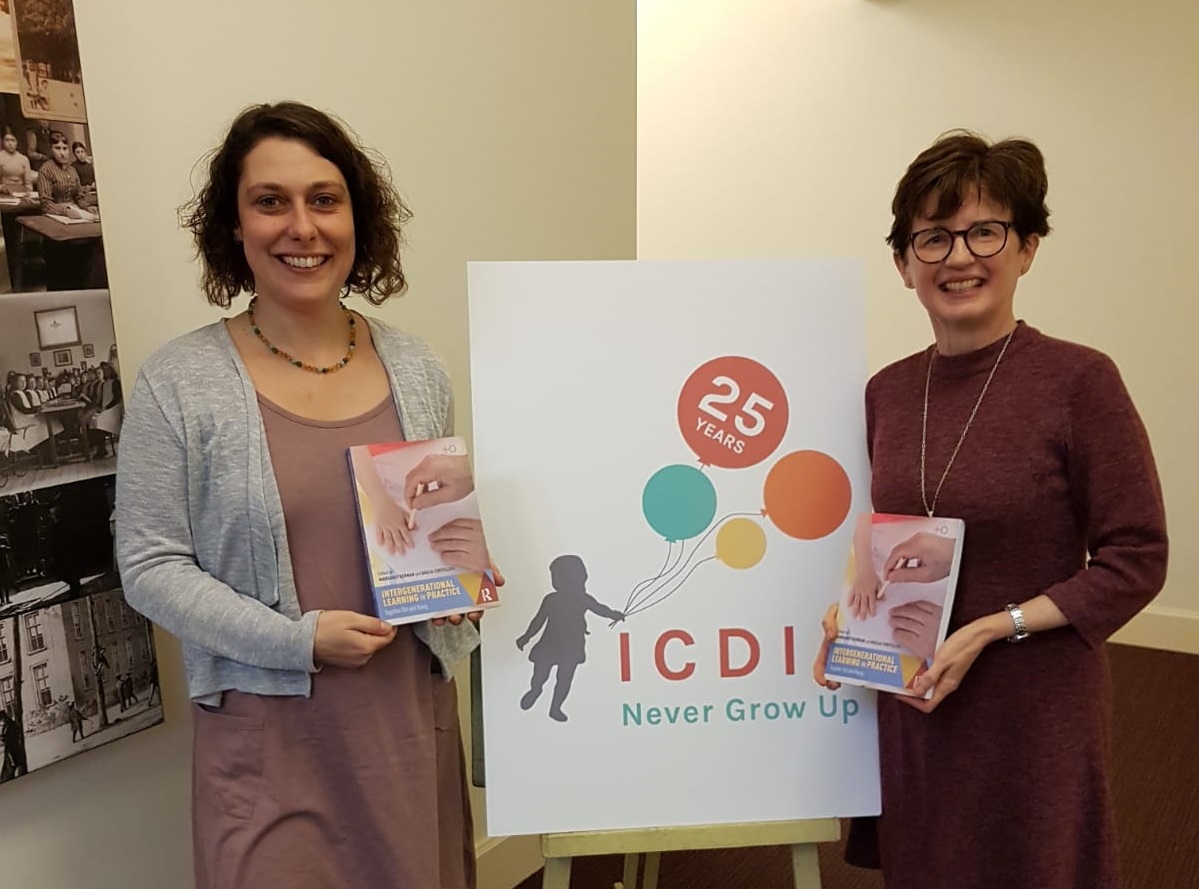
Experienced international authors from Europe, North America and Australia provide a broad array of perspectives on intergenerational learning, ranging from pedagogy to planning and community development, and cover topics including:
- The context, theory and existing research behind intergenerational learning
- The changing relationships between young children and older adults
- Building communities and services for all ages
- Managing everyday encounters in public spaces between young and old
- Ensuring quality in intergenerational practice
- Insights on how intergenerational learning challenges discrimination
A review from Matthew Kaplan, Professor, Intergenerational Programs and Aging, Pennsylvania State University, USA
“There is much to love about this book. The opening passage illuminates the contours of meaning and joyful engagement between an older adult volunteer and a classroom of tuned-in 5-year-olds reading together. The following 14 chapters introduce fresh concepts, perspectives, and examples of “intergenerational learning” in Europe, Australia, and the U.S. My favorite highlights: an intergenerational summer camp in Italy; “culturally responsive” storytelling to expose Aboriginal children to indigenous language and knowledge; intergenerational “play hubs” created with Roma children; and some spatial concepts and considerations for designing age-inclusive public spaces.”

